
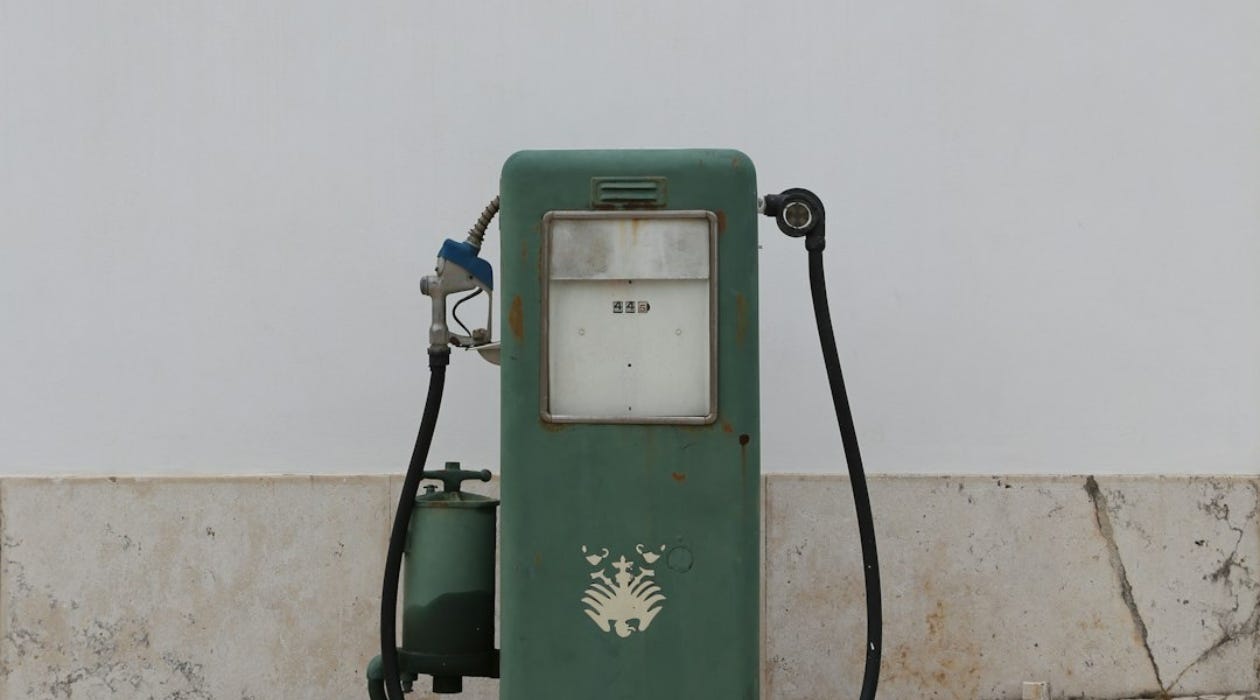
Dirty Fuel Works. Until It Doesn’t.
Clean fuel, dirty fuel, and the hidden cost of how we chase our goals.

Dear Reader,
We all run on something. The question is: what?
Some of us are powered by purpose. By service. By the desire to contribute to something meaningful. This kind of fuel tends to burn steadily. It sustains us. It leaves us feeling aligned even when the work is hard.
And then there’s another kind of fuel.
The quieter, older kind. The one that formed before we had language for it. A comment that lodged itself in the nervous system. A moment of being overlooked, underestimated, dismissed. A subtle decision made early on: I’ll show you.
This fuel is powerful. It sharpens focus. It compresses doubt into drive. It has built companies, careers, reputations. For many high performers, it has been extraordinarily effective.
And it’s not accidental.
At some point, this fuel protected you. It organized you. It gave you momentum when something inside felt uncertain or unrecognized. From that lens, there’s nothing to reject here, only something to understand.
What often goes unexamined is not whether this fuel works, but what it requires to keep working.
Because fuel rooted in proving, defending, or outrunning something rarely rests. It doesn’t resolve, it repeats. The external conditions change, the achievements stack up, yet the internal signal remains: not enough yet.
And this is usually the moment of confusion for leaders.
The goals are met. The success is real. And still, the system stays activated. The edge doesn’t soften. The arrival never quite arrives.
This isn’t a failure of ambition. It’s a sign that the fuel source has outlived its original purpose. The work here is not to judge what carried you this far. Judgment collapses awareness. Curiosity expands it.
The work is to notice, without defensiveness or pride, what actually mobilizes you now. What tightens your system. What relaxes it. What fuels action at the cost of presence. What allows both.
As one year closes and another begins, there’s a natural pause available, not to reinvent yourself, but to differentiate between momentum and intention.
To ask:
What fuel do I default to under pressure?
What does it ask of my body, my relationships, my attention?
If this fuel were no longer necessary, what might become available?
The most powerful leaders aren’t the ones who eliminate ego or edge. They’re the ones who no longer confuse activation with aliveness.
They know what drives them. And they choose, again and again, whether that driver is still the right one.
Here’s to a January of honest fuel checks. Not to decide where you’re going but to become conscious of what’s taking you there.
Tiny Thoughts
Edit yourself for approval and you become a minority shareholder in your own life. The cost of being easy to live with is destroying the person who has to do the living.
**
Going on a massive journey to end up back where you started is not the same as having never left.
**
Frustration is bargaining with reality, hoping it will change.
Insight
January arrives with a particular invitation. Fresh thinking. Open possibility. That subtle pull toward clarity about what matters most and maybe, if we’re honest, a quiet hope that this year something might finally click into place.
For many leaders, goals become the natural response. We craft them thoughtfully, sometimes with a precision that would impress our own teams. There’s often an unspoken expectation tucked inside: this goal, properly constructed, will create the conditions for something to shift. For the ground to feel more solid beneath us.
That impulse? It comes from genuine care for our work and our impact. From wanting to do right by what we’re building.
What might be worth exploring, though, is the relationship we’re actually building with those goals. In January especially, they can quietly transform into something closer to promises we make ourselves: When this milestone lands... when this structure finally holds... when this works the way I know it can... then I’ll have what I need to feel grounded.
If you pause there, you might recognize the territory. The familiar ache of it.
You’ve stood in that place before. The goal was achieved, genuinely, deservedly achieved. The satisfaction was real. And yet the sense of having arrived was... brief. Something kept reaching forward. Not because you failed at anything. Not because you’re incapable of contentment. But perhaps because you were looking for stability in a fundamentally unstable place.
Goals are immensely useful. They create direction, focus resources, generate the momentum that moves important work forward. And they’re inherently conditional, dependent on markets, people, timing, a thousand factors that live beyond your direct influence. When we unconsciously ask them to also provide our sense of worth or groundedness, we create an exhausting bargain. One we’ll keep trying to honor, over and over, wondering why it never quite settles.
What actually remains stable? Your presence with the work itself. The quality of attention you bring, even on the hard days. The standards you hold, not for appearance, but because they matter to you. The integrity you maintain when outcomes are uncertain and no one’s measuring.
When these become primary, something interesting happens. Something that might even feel like relief. Goals stop bearing weight they were never designed to carry. They return to being instruments, not assessments of whether you’re leading well or living right.
This January, alongside What do I want to achieve this year? you might also sit with:
What quality of leadership do I want to embody, independent of any particular outcome?
Who do I want to be in the pursuit of what matters most?
Those questions don’t depend on the calendar turning. They don’t complete when a goal is reached.
They stay available. And perhaps that’s exactly where the stability we’ve been seeking has been waiting all along.
What I’m Re-Reading
I’m rereading Outlive this January, and it’s curious to see what reveals itself this time.
At its core, the book makes a point that’s both quiet and radical: health isn’t something to tend to later. It’s the foundation that determines how long you can think clearly, recover well, and stay genuinely present to what you’re building.
And here’s what we often don’t want to admit: without that foundation, everything else becomes harder. The thinking gets cloudier. The resilience thins. The capacity to actually enjoy what you’ve worked so hard to create? It fades.
Attia’s concept of healthspan not just longevity, but sustained capability, keeps finding me. The capacity to be there for what matters, not just theoretically committed but physically able.
What’s landing on this reread isn’t the science. It’s the uncomfortable reminder that small, unsexy, repeatable rituals often matter more than the dramatic interventions we fantasize about.
For me, that’s meant recommitting to basics I already know make a difference: actually taking my supplements. Making space for sauna as genuine recovery. Choosing strength work to preserve what allows me to keep showing up fully.
High performance isn’t only expressed in moments of visible intensity. It’s sustained by the quiet practices that protect your ability to be present, not just this quarter, but for the next twenty years of work that matters.
I’m curious, what small ritual or principle you already know matters, is quietly calling you forward this year?
Until Next Time…